Mudjacking in St. Paul: Lift Your Driveway or Replace It?
Concrete driveways on century-old lots and sandy soil settle for a reason. Get honest lift-or-replace answers from a crew that only pours new.







Should You Mudjack Your St. Paul Driveway?
Cornerstone replaces driveways and does not offer mudjacking or concrete lifting.
For most St. Paul driveways, mudjacking is a short-term fix rather than a smart long-term solution. A lift raises the sunken panel, but on the older lots and sandy soil found across the city, it leaves behind the washout and frost movement that dropped the slab, so many lifted driveways end up settling again.
There is a narrow case where lifting makes sense, and we’ll show you exactly what it looks like. If you have a lifting quote in hand, the sections below walk through the signs that point to replacement, what each option costs over time, and how a new driveway is built to stop the cycle.

Satisfied Customers
★★★★★
By far one of the easiest companies to work with. My fiancé found them very easy to schedule and communicate with. They did a beautiful job on our new build slab home and shop. Thank You! Thomas & Victoria
★★★★★
Top notch in every way! From the prompt, knowledgeable and kind initial Visit and estimate to the tear out and installation. These guys are the best. The pricing was competitive and the knowledge and workmanship was amazing. Watching them pour our huge driveway was like watching the ballet. The way these guys worked together and clearly enjoying what they were doing was really special to watch.
Our Proven Concrete Driveway Installation Process
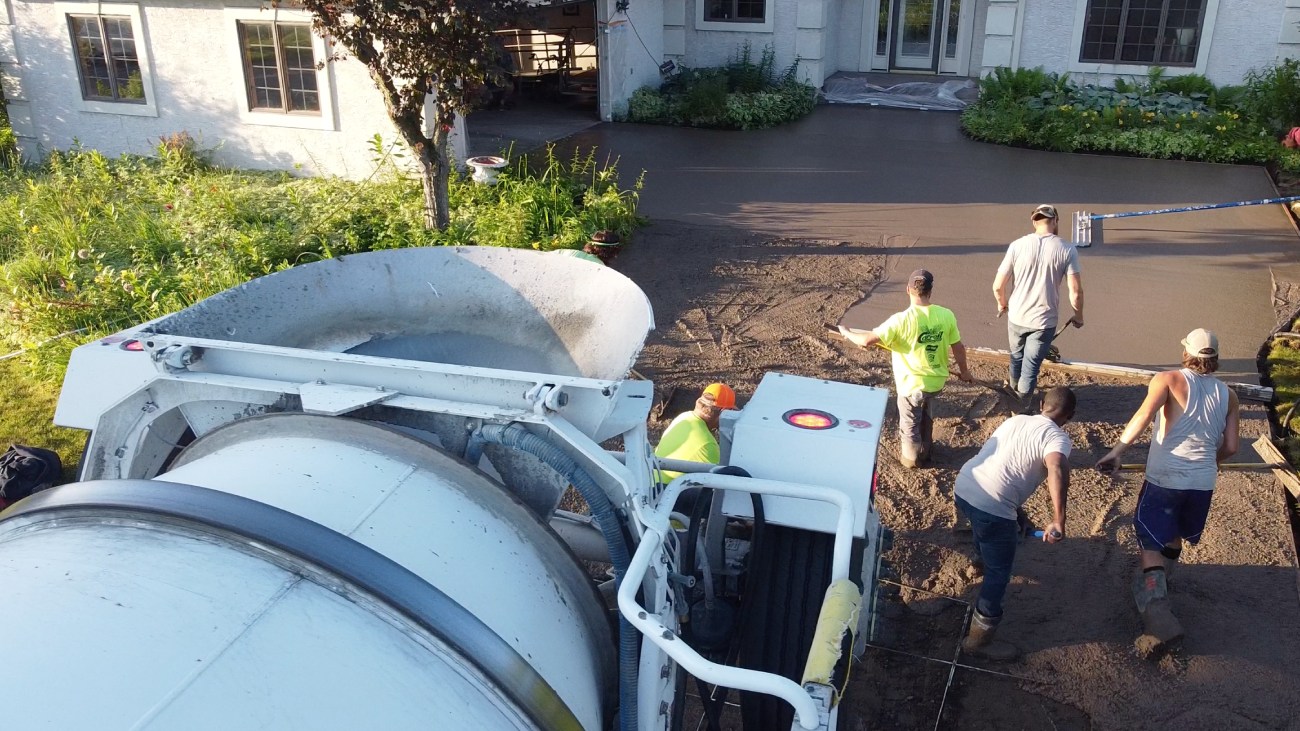
Replacing a driveway only beats lifting it if the new slab is built so the same failure can’t repeat. Every Cornerstone replacement follows the same four steps, handled start to finish by our own crews.
1. Tear-Out Process
We remove the old slab and dig out the soft or washed-out base that lets it sink, rather than pumping fill into the void.
2. Set-Up Process
We rebuild and compact the base, grade it to carry water away from the slab, and set forms for proper thickness and slope. If the apron sits in the city right-of-way, we handle the Public Works permit.
3. Pour Process
We place 4,500 PSI concrete with macro-synthetic fiber mixed in at 3 lb per cubic yard, so reinforcement runs through the full depth of the slab instead of sitting in one layer.
4. Cut and Clean Process
We cut control joints to give the slab planned places to crack, then clean the site and finish it with complementary dirt and seed.
On most driveways, we use MasterFiber MAC Matrix instead of a rebar grid. According to the manufacturer’s data sheet, each fiber is made of 100% virgin polypropylene with a tensile strength of 85,000 psi, a rating also listed on the Maine DOT list of approved concrete. It’s designed to replace the welded wire and No. 3 and No. 4 bars typically used as temperature and shrinkage reinforcement. The fibers increase the slab’s flexural toughness and impact resistance, let it move naturally through freeze-thaw while holding hairline cracks tight, and leave nothing in the slab to rust. Some garage floors and stamped finishes still get rebar.
Our Concrete Driveway Services
We don’t offer mudjacking or other lifting, so it isn’t listed here. These are the services St. Paul homeowners turn to once a lift no longer makes sense.
Concrete Driveway Installation and Replacement
Full tear-outs that remove the failed slab and the base beneath it, then rebuild with a compacted base, correct the slope, and reinforce the concrete. It’s the long-term fix for a driveway that has sunk more than once or is settling in several places at the same time.
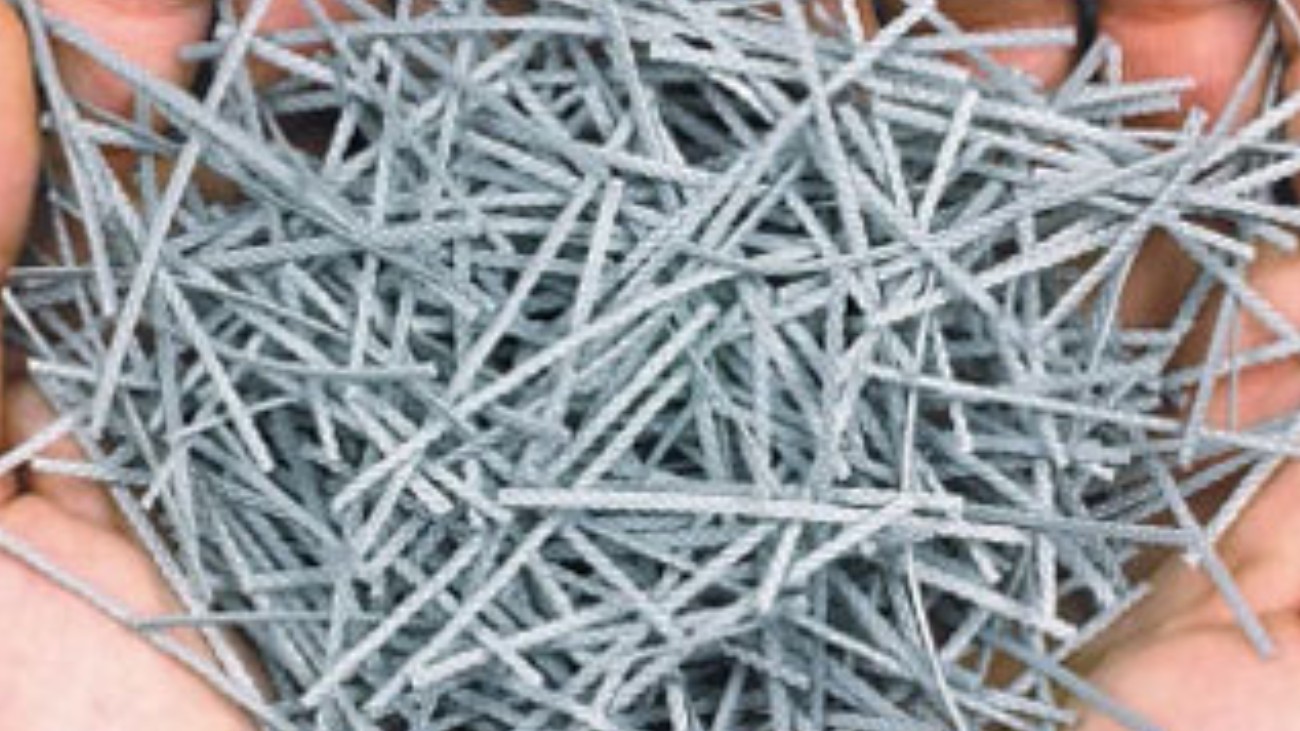
Fiber Reinforced Concrete Driveways
Macro-synthetic fibers mixed through the whole slab hold hairline cracks tight through freeze-thaw cycles and leave no steel inside to rust. We use fiber on about 95% of driveway projects and keep rebar for jobs that call for it, such as some garage floors and stamped finishes.
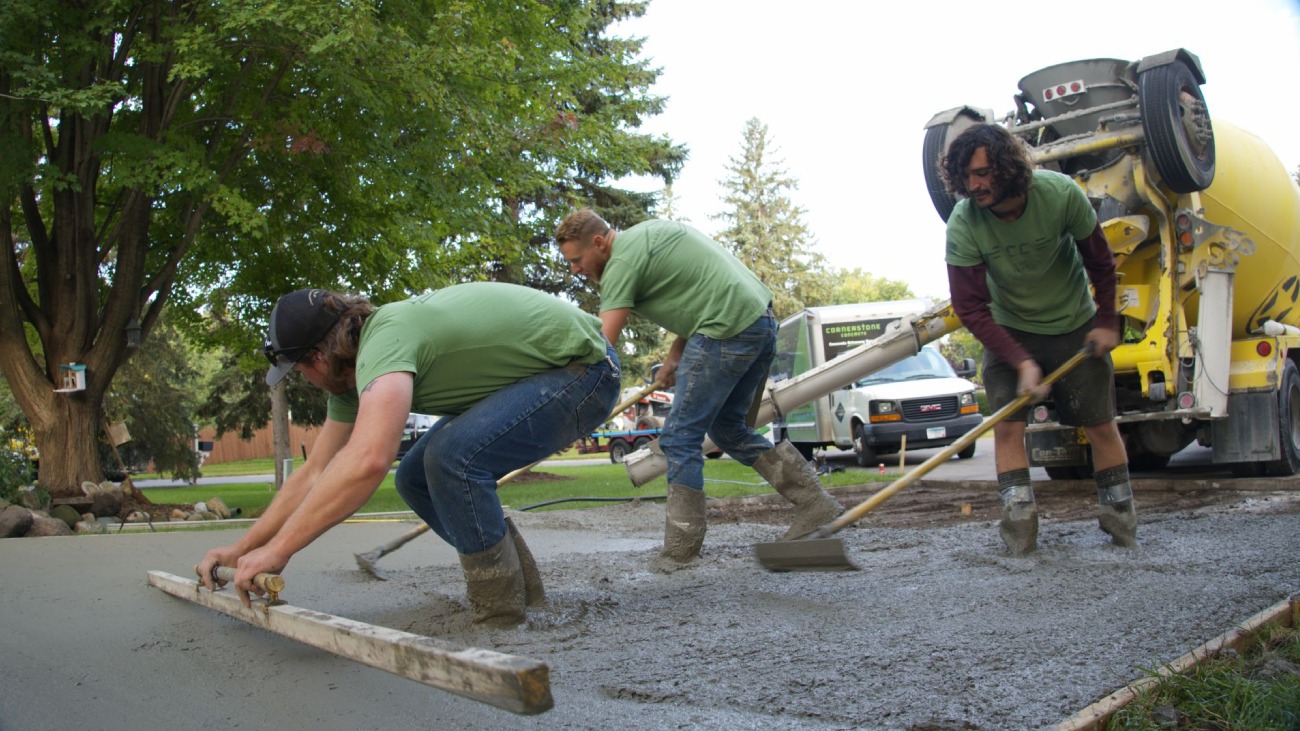
Maintenance-Free Driveway Mix
Our mix design seals the concrete from the inside during the pour, so there’s no topical sealer to wear off or reapply every few years. You get a driveway that holds up winter after winter without a resealing schedule or annual upkeep.
Aprons, Walkways, and Add-Ons
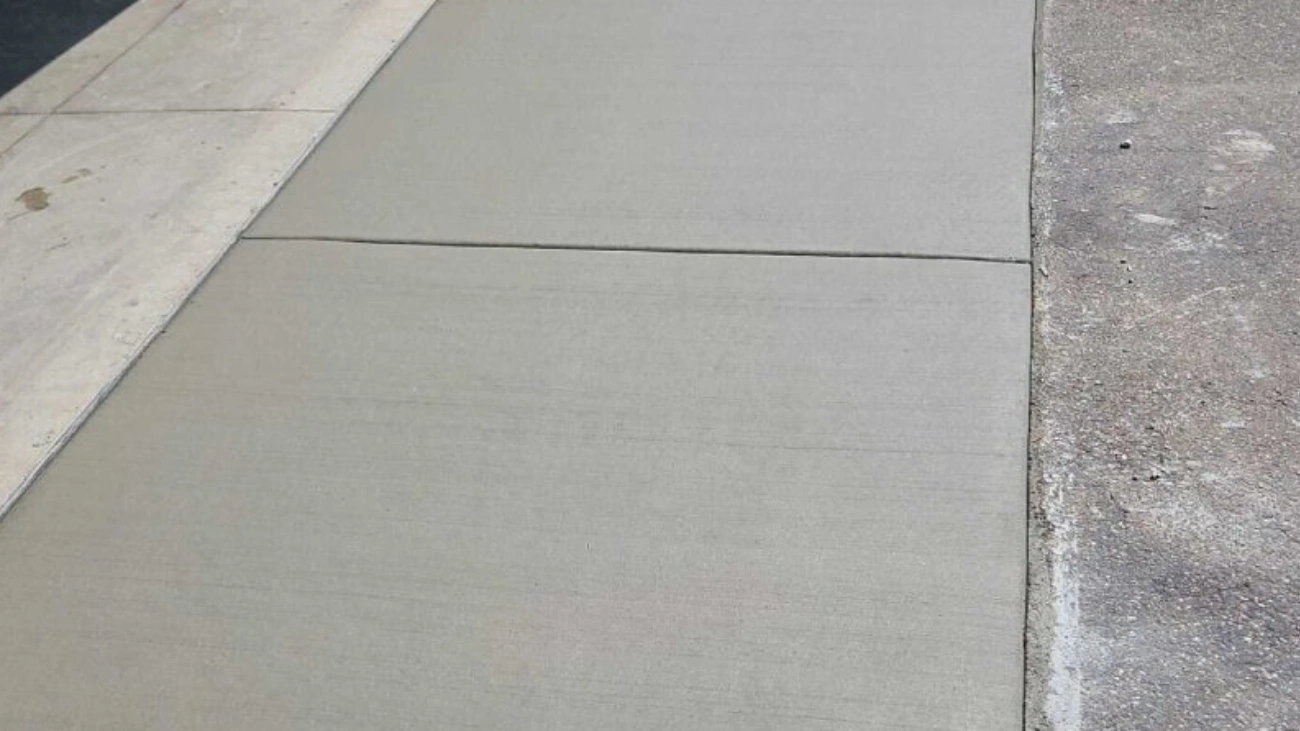
Driveway aprons, sidewalks, steps, and patios are poured to match your new driveway. On alley-loaded St. Paul lots, replacing the apron along with the drive keeps the whole run on the same new base, so the two don’t settle at different rates.
Sand, Frost, and Century-Old Lots: Why St. Paul Slabs Sink
Much of the city was built on glacial outwash sand and gravel, which drains fast but washes out easily when a downspout empties at a slab edge. Winter adds pressure from below. The Twin Cities see 55 to 60 freeze-thaw cycles in a typical snow season, and Ramsey County’s 3½-foot frost depth means a driveway only inches thick sits entirely in soil that freezes and thaws.
The housing stock compounds it. The city’s own housing assessment found that 57% of St. Paul’s single-family homes, duplexes, and triplexes were built before 1930, with the oldest homes ringing downtown and the Capitol in neighborhoods like Dayton’s Bluff, Frogtown, and Summit-University. Many of those lots run off one of roughly 2,225 city alleys to a detached garage on a decades-old base. Old slabs over old base, with water still moving underneath, tend to sink again after a lift, which is why our driveway replacement work in St. Paul begins below the slab.
When Mudjacking Your Driveway Can Make Sense
Lifting is a reasonable call in a narrow set of cases, which our metro-wide guide to driveway leveling vs. replacement covers in more depth. Your driveway should match all four of these points:
- Only one panel has sunk. The rest of the driveway is flat and solid.
- The surface is sound. There’s no flaking, crumbling edges, or web of cracks.
- The water source is fixed. For example, the downspout now drains away from the slab.
- It’s the first lift. The slab hasn’t been lifted before.
If your driveway checks every box, a lift can buy you real time. If it misses even one, look at the signs below before you sign the quote.
Six Signs Mudjacking Won’t Fix Your Driveway
Most lift quotes we’re asked about are for driveways showing at least one of these signs. Any one of them means the problem runs deeper than a single sunken panel.
- More than one settled or cracked section. The base has failed in several places.
- Spalling or scaling. A lift raises the flaking surface with the damage still in it.
- A failed base. Fill pumped into a void doesn’t rebuild the gravel base beneath it.
- Ongoing drainage problems. Water under the slab keeps washing the sand out.
- An older slab. A lift restores the level, not the years.
- A slab that’s been lifted before. If the slab is sinking again, the first fix missed the cause.
If you recognized your driveway in this list, replacement fixes the cause once, instead of paying to lift the same slab again and again.
What Lifting Costs Over Time vs. a New Driveway
Mudjacking almost always costs less up front. But a lift typically lasts 5 to 10 years, and most lifted driveways still need replacing eventually, so the real comparison is what you’ll spend over time. Here’s how the numbers stack up for a typical driveway.
| Option | Per sq ft | Driveway of roughly 400-450 sq ft | How long it lasts |
|---|---|---|---|
| Mudjacking | $3-$6 (HomeAdvisor) | $1,500-$3,000 for 450 sq ft | 5-10 years; not a permanent fix (HomeAdvisor) |
| Polyjacking / foam lifting | $5-$25 (HomeAdvisor) | $3,200-$7,500 for 450 sq ft | Longer than mudjacking (HomeAdvisor) |
| Cornerstone tear-out and replacement | $10-$14 (Cornerstone pricing) | $5,000-$7,000 for a 20×20 (400 sq ft) | New slab; 30+ years per our pricing page |
On paper, mudjacking looks like the bargain. The difference is what the money buys: the replacement price gets you a new slab built to last decades, while the lifting price buys a few years before you face the same decision again.
What a New Driveway Costs by Size
Here’s what tear-out and replacement typically costs by driveway size:
Driveway size | Cost range | Average |
20×20 (400 sq ft) | 5,000–7,000 | $6,000 |
24×24 (576 sq ft) | 7,000–8,500 | $7,750 |
16×40 (640 sq ft) | 8,400–9,600 | $9,000 |
20×40 (800 sq ft) | 9,600–11,800 | $10,700 |
20×50 (1,000 sq ft) | 11,500–13,500 | $12,500 |
30×40 (1,200 sq ft) | 13,500–16,200 | $14,850 |
30×45 (1,350 sq ft) | 15,600–17,600 | $16,600 |
32×50 (1,600 sq ft) | 16,800–19,200 | $18,000 |
32×55 (1,760 sq ft) | 18,500–20,400 | $19,450 |
40×50 (2,000 sq ft) | 19,000–22,000 | $20,500 |
Smaller driveways cost more per square foot, and larger ones usually cost less; final pricing depends on site conditions and upgrades. See the details on our concrete driveway pricing page.
Lifting Twice Can Cost as Much as a New Driveway
“Mudjacking is a temporary band-aid to a more underlying issue,” says Blake Holst, our operations manager. “Mudjacking, if you do it, you’re gonna do it again.” In his honest opinion, “it’s a waste of money.” Because a lift doesn’t fix what’s under the slab, a driveway that sank once often sinks again. Lift a 450 sq ft driveway twice, at $1,500 to $3,000 each time, and you’ve spent $3,000 to $6,000. That’s close to the $5,000 to $7,000 cost of a new 400 sq ft driveway, and you still have an old slab that needs replacing.
Replacing Later Usually Costs More
Blake Holst, our operations manager, often meets homeowners who lifted their driveway two or three times before replacing it anyway. “If you’re gonna do the driveway, it’s better to do it all now, because it’s never gonna be cheaper than it is,” he says. “Two years down the road, your drive is gonna cost more than it is today.” The numbers back him up: ready-mix concrete prices in the Midwest rose about 40% between January 2020 and December 2025.
The Cornerstone Difference: Why St. Paul Homeowners Choose Us
Choosing between a lift and a replacement starts with an honest look at the slab, which is harder to get from a company that sells only one of the two. Here’s what you get when we come out to your driveway.
No lift to sell you
We don’t do mudjacking or any other lifting, so when we say your driveway is a lift candidate, there’s nothing in it for us. When we recommend replacement, we show you the signs that led us there.
Family-owned since 1989
More than three decades of pouring driveways in Twin Cities soil and winters, and a lot of that time spent tearing out slabs that were lifted before.
In-house crews, no subcontractors
The people who measure your driveway are the same team that tears it out, sets the base, and pours the new slab.
A 3-year workmanship warranty
Every replacement is backed in writing, along with published per-square-foot pricing, so you can check our quote against the numbers.
Permits handled for you
If your apron sits in the city right-of-way, we take care of the Public Works permit and inspections, so you never need to call the city.
Work With a Trusted Driveway Replacement Contractor in St. Paul, MN
Mudjacking FAQs
Is mudjacking worth it for a St. Paul driveway?
It can be for a single sunken panel on an otherwise sound driveway, once the water problem is fixed. For older, multi-panel or previously lifted driveways, it usually postpones a replacement you’ll still pay for, likely at a higher price.
How long does mudjacking last?
Most mudjacking repairs last five to 10 years, according to HomeAdvisor’s concrete leveling cost guide, which also notes it isn’t a permanent fix because it doesn’t address the soil problems behind the sinking. The most common issue is the panel settling again, especially when water keeps reaching the sand under the slab.
Is it cheaper to mudjack or replace a driveway?
Mudjacking is cheaper up front, at about $3 to $6 per square foot, versus $10 to $14 for our tear-out and replacement. Once a driveway needs a second lift, the two lifts together can approach the price of a new slab, and the old concrete still has to come out eventually.
Is polyjacking better than mudjacking?
Polyjacking, also called poly leveling or foam lifting, is the newer method. It uses polyurethane foam that weighs a small fraction of mudjacking slurry and generally lasts longer. It costs more, roughly $5 to $25 per square foot, and shares mudjacking’s limit: it raises the slab but doesn’t renew the concrete.
Does Cornerstone Concrete do mudjacking or concrete lifting?
No. We tear out and replace driveways and don’t offer mud jacking, slabjacking, sandjacking, polyjacking, or any other concrete raising, which is why we can tell you plainly whether your driveway is a lift candidate.