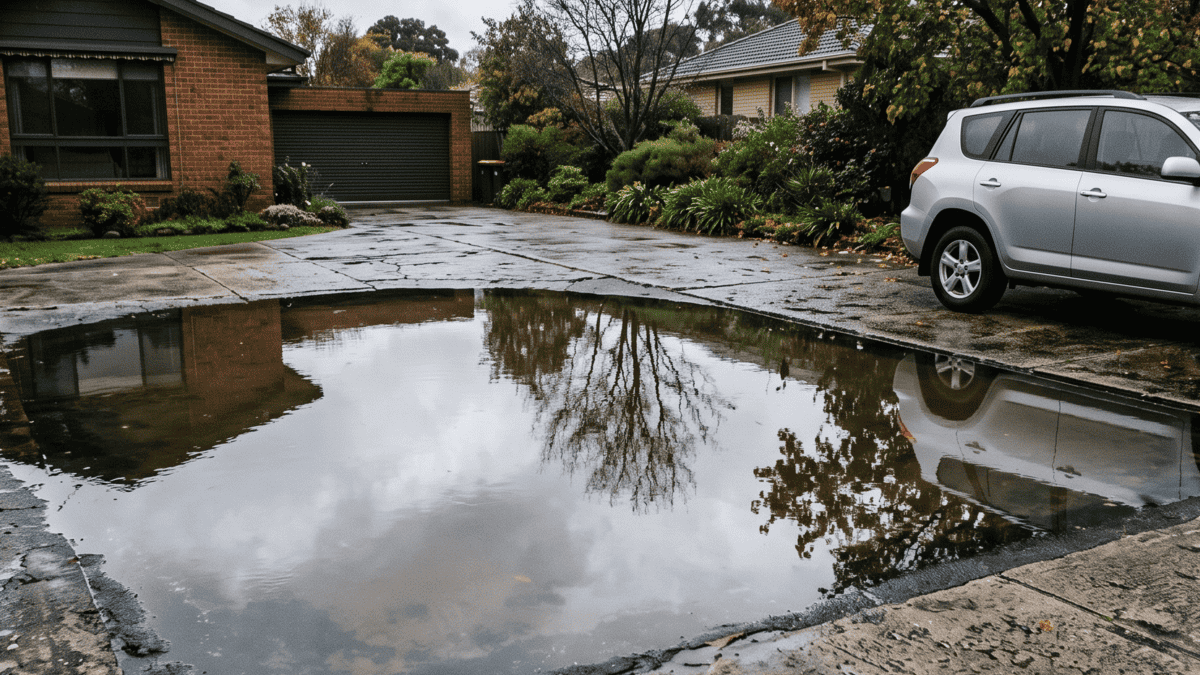
Standing water on a concrete driveway can be more than a small nuisance. A puddle after heavy rain may dry quickly, but repeated pooling can point to a slope issue, settled concrete, blocked runoff path, or failing driveway surface.
In Minnesota, ponding water on concrete driveway surfaces can also become a winter problem. When water sits, freezes, thaws, and refreezes, it can create slick spots and add stress to already worn concrete. At Cornerstone Concrete, we help homeowners determine whether the issue calls for a small correction, concrete driveway repair, or a more complete driveway replacement.
Why Does Standing Water on a Concrete Driveway Matter?
Standing water matters because it can reveal whether the driveway is moving runoff away from the home, garage, and walking areas as intended. The Minnesota Stormwater Manual notes that impervious surfaces can be disconnected and directed toward pervious areas to manage runoff, which is why surface runoff direction should be considered when water keeps collecting on a driveway.
Recurring water pooling on concrete can also make everyday use more frustrating. In warm months, puddles can leave stains, collect debris, or highlight low spots. In colder months, those same spots ice over and make the driveway harder to walk, shovel, or snowblow.
What Usually Causes Water Pooling on Concrete?
Water pooling on concrete usually comes from one of a few conditions: low spots in the slab, poor pitch, settled concrete, blocked runoff paths, soil buildup along the edge, or nearby surfaces that trap water instead of letting it move away.
Some issues are simple, especially if leaves, mulch, snow piles, or landscape edging are blocking water. Other problems are built into the slab itself. If the driveway was poured with the wrong slope or has settled over time, the water may keep returning, no matter how often the surface is cleaned.
What Are 5 Ways to Fix Pooling Water on Concrete?
The right way to fix pooling water on concrete depends on the cause. Before assuming the entire driveway needs to be replaced, it helps to look at where the water collects, how long it stays, and whether the concrete around it is cracked, settled, or uneven.
1. Clear Blocked Runoff Paths
Start with the easiest possibility. Leaves, dirt, mulch, edging, snow piles, or compacted soil along the driveway can stop water from flowing off the surface.
A clear edge may allow water to drain the way it was intended to. If the puddle disappears after cleaning the runoff path, the driveway itself may not be the main problem.
2. Check the Driveway Slope
A driveway should move water away from the garage, foundation, and main walking areas. If water flows toward the house or collects near the garage door, the slope may not be doing its job.
Slope issues are more serious because they are often built into the driveway. In some cases, small corrections may help, but widespread pitch problems can require more extensive concrete driveway repair or replacement planning.
3. Repair Isolated Low Spots When It Makes Sense
A small low spot may be repairable if the surrounding concrete is still stable. The key is whether the issue is isolated or part of a larger pattern of settlement.
Repair is less likely to work when cracks are spreading, the slab is moving, or the low spot keeps worsening. This is also where DIY patching tends to backfire, covering the symptom without correcting the cause.
4. Review Nearby Concrete That May Trap Water
Driveways rarely work alone. Aprons, sidewalks, walkways, steps, stoops, and driveway extensions can all affect how water moves around the property.
If nearby concrete has settled or no longer lines up with the driveway, it may trap runoff in one area. Cornerstone can review these nearby concrete surfaces that affect driveway drainage as part of a larger plan when more than one surface is contributing to the problem.
5. Replace the Driveway When the Problem Is Built Into the Slab
Replacement may be the better long-term fix when the driveway has widespread settlement, poor pitch, major cracking, or repeated ponding that cannot be corrected with minor work. In those cases, the issue is not just water on the surface. It is how the driveway was built or how the base has changed over time.
A new installation lets the contractor address tear-out, base prep, grading, forms, drainage, and finish together, and it is the point to weigh pavers against poured concrete for durability. For recurring drainage failure, our driveway replacement process, built around proper prep, helps homeowners understand what needs to happen before the pour.
The best fix is the one that addresses why water is staying in place. A quick surface repair may help in some situations, but repeated ponding usually deserves a closer look.
When Is Concrete Driveway Repair Enough?
Repair works well when the water problem is limited to one area, a small low spot, a damaged edge, or a nearby obstruction, and the surrounding concrete is still stable. It becomes less practical when the driveway has multiple low spots, growing cracks, or water that keeps returning after every rain or snowmelt, since the issue likely reflects a deeper runoff or base problem that surface work cannot solve reliably.
When Is Replacement the Better Long-Term Fix?
Replacement is often worth discussing when the slab has settled, the original pitch was wrong, or the surface has deteriorated across a large area. Cost depends on the size of the affected area, tear-out needs, access, grading, base prep, concrete mix, and whether nearby surfaces need attention. Homeowners can review what affects a concrete driveway estimate to better understand why one drainage issue may be simple while another requires a larger project.
How Does Cornerstone Evaluate Driveway Drainage Problems?
After more than 10,000 Twin Cities driveways since 1989, Cornerstone reads standing water as a symptom, not just a surface issue. Before recommending repair or replacement, we review how water is moving, where it is collecting, and whether the driveway itself is causing the problem.
Our evaluation may include:
- Checking the slope near the garage, street, apron, and walking paths
- Looking for settled sections, widening cracks, or low areas
- Reviewing whether nearby concrete is trapping runoff
- Determining whether repair can reasonably solve the issue
- Explaining when replacement is the more practical long-term option
As a local concrete driveway contractor, we focus on the residential conditions common in Minnesota: snowmelt, freeze-thaw movement, and drainage around garages and entries. If replacement is the right direction, we can also discuss whether a driveway mix designed for lower upkeep fits your project goals.
Is Your Driveway Holding Water After Every Storm?
If standing water keeps showing up after rain or snowmelt, the next step is to find out whether the problem is simple, repairable, or built into the driveway itself. Waiting too long can allow puddling, ice, and surface wear to keep coming back season after season.
For help with a concrete driveway runoff issue, concrete driveway repair, or Twin Cities concrete driveway replacement, contact Cornerstone Concrete. We have built over 10,000 Twin Cities driveways with a BBB A+ rating and Angi Super Service Award since 1989. We help homeowners assess slope, drainage, low spots, and driveway quality to help them choose the proper fix.