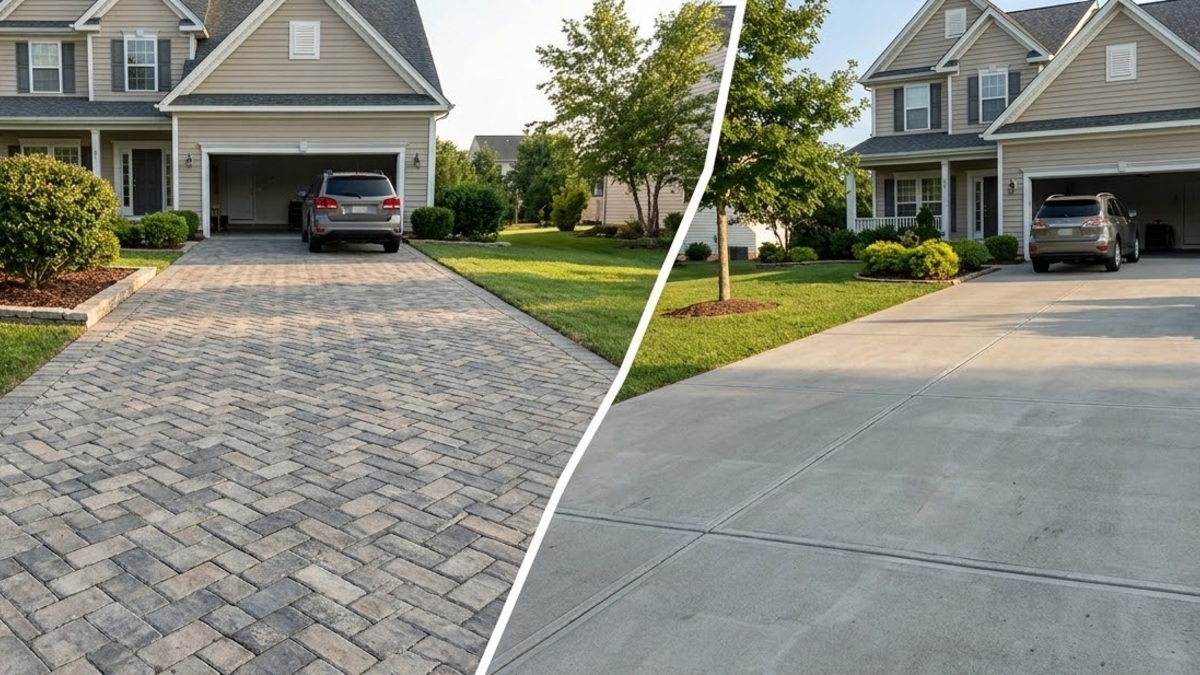
When homeowners compare paver vs. poured concrete driveways, the real question is not only which material can last longer. It is the question of which surface is more practical for the way your driveway handles vehicles, snow removal, drainage, freeze-thaw cycles, and long-term upkeep.
For many Twin Cities homes, a properly installed poured concrete driveway is often the stronger long-term choice because it creates a stable surface with fewer joints and less routine resetting. Pavers can still be a good fit for certain design goals, but they come with different maintenance expectations. At Cornerstone Concrete, we help homeowners compare both options clearly before making a driveway replacement decision.
Which Driveway Usually Lasts Longer in Minnesota?
A poured concrete driveway often has the advantage when the base, slope, mix, joints, and curing are planned correctly. Durability depends on more than the surface material, though, especially in Minnesota, where freeze-thaw movement, drainage, and base stability affect how well a driveway performs.
Paver driveways can last a long time over a properly prepared base, but each unit and joint becomes part of the maintenance picture. Federal pavement guidance notes that moisture-sensitive soils, base drainage, and water infiltration can affect performance, which is why free-draining base materials and adequate drainage matter for long-term stability.
What Are the Main Paver vs. Poured Concrete Driveway Pros and Cons?
Both options can work, but they behave differently over time. The best choice depends on whether you prioritize appearance, flexibility, repair style, maintenance expectations, or long-term surface stability.
| Factor | Paver Driveway | Poured Concrete Driveway |
| Surface stability | Individual units may shift if the base moves | A continuous slab can feel more stable when properly installed |
| Maintenance | Joints may need sand, weed control, or resetting | Needs proper care, cleaning, and attention to cracks if they appear |
| Repairs | Individual pavers can often be replaced | Repairs depend on crack type, severity, and slab condition |
| Snow removal | More joints and edges can catch shovels or plows | A smoother surface can be easier to shovel or snowblow |
| Appearance | More patterns, colors, and layout options | Clean, classic look with finish and joint design options |
A comparison table can make pavers vs. concrete driveways look simple, but every property is different. Soil conditions, driveway slope, garage elevation, drainage, and how you use the space all affect the right recommendation. Upkeep differs in kind as much as in amount, and the habits that extend a driveway’s lifespan look different on a jointed surface than on a continuous slab.
Where Do Pavers Perform Well?
Pavers can be attractive for homeowners who want a patterned or highly customized driveway surface. They offer design flexibility because the driveway is built from individual pieces rather than one poured slab.
Repair flexibility is another reason some homeowners consider pavers. If a small section is stained or damaged, individual units may be replaced without removing the entire driveway. That can be helpful, but it does not eliminate the need for ongoing joint and base maintenance.
Common Paver Drawbacks
The joints that make pavers flexible for repair also become long-term maintenance points; joint sand can wash out, weeds can appear, and individual pavers may settle if the base moves. In a climate with repeated freezing and thawing, snow and ice removal on shifting surfaces can also become frustrating over time, especially where shovels, snowblowers, or plows catch on uneven areas
Why Do Many Homeowners Choose Poured Concrete?
Poured concrete remains a strong driveway material because it creates a clean, continuous surface designed for vehicle traffic, daily access, and long-term curb appeal. For homeowners who want a practical surface without the joint-by-joint upkeep of pavers, concrete is often the better fit.
A well-built concrete driveway still needs the right planning. Base preparation, slope, reinforcement where appropriate, control joint placement, concrete mix, and curing all influence performance. For homeowners comparing materials, the benefits of a well-built concrete driveway can help clarify why poured concrete remains a practical choice for many Minnesota homes.
Concrete Can Still Crack
Concrete is durable, but no contractor should tell you it can never crack. Control joints are placed to help guide where movement occurs, but poor drainage, weak base material, heavy loads, tree roots, or severe freeze-thaw stress can still create problems. Not every crack is a structural concern, and knowing when a crack calls for repair rather than replacement is what keeps a minor issue from turning into an expensive one.
Proper installation reduces risk by addressing the driveway as a system. The slab, base, joints, slope, and surrounding drainage all need to work together.
How Should You Compare Cost and Long-Term Value?
Paver vs poured concrete driveway cost and value can vary widely because both options depend on property-specific details. Paver driveways often involve more individual pieces and labor-intensive installation, while concrete driveway pricing is shaped by tear-out, driveway size, slope, base prep, mix design, access, and finish.
Long-term value should include maintenance expectations, not only the initial estimate. A paver driveway may offer repair flexibility, but it may also require more joint care or resetting, while a poured concrete driveway may involve fewer routine surface adjustments when it is installed well. Homeowners can review Cornerstone’s driveway project pricing factors to better understand what affects an estimate.
What Matters Most for Twin Cities Driveway Replacement?
Minnesota driveways face snow, ice, deicing exposure, spring thaw, and heavy seasonal moisture. Those conditions make base prep and drainage especially important, regardless of which surface you choose. For Twin Cities concrete driveway replacement and the surrounding metro, we usually want to review:
- How water moves across and away from the driveway
- Whether the existing base is stable or needs correction
- How the driveway connects to the garage, apron, sidewalk, or street
- Whether nearby walkways, steps, or pads affect drainage
- Which concrete mix and finish make sense for the property
Material choice matters, but installation quality often decides how well the driveway performs. A good driveway should be planned around the home, not treated as a flat surface poured in isolation. When steps, walkways, or a front pad border the slab, handling them during the same project is usually cheaper and produces a cleaner result than coming back for them later.
How Does Cornerstone Help Homeowners Compare Driveway Options?
Cornerstone Concrete specializes in residential concrete driveways, so our recommendation naturally focuses on poured concrete when it is the right fit. At the same time, we want homeowners to understand the tradeoffs before committing to a project.
Our driveway conversations typically focus on:
- What is failing with the current driveway
- Whether replacement is necessary or another option makes sense
- How drainage, slope, and base prep affect long-term performance
- Which finish, joint layout, and mix are appropriate
- Whether our low-upkeep driveway mix option is worth discussing
We also explain how we replace concrete driveways so homeowners understand what happens before the pour. A good comparison should leave you with fewer questions, not more confusion.
Still Weighing Pavers Against a Concrete Driveway?
The best driveway decision is the one that still makes sense after several winters, not just the one that looks best on day one. Pavers may appeal to homeowners who want pattern flexibility and individual-unit repairs, but poured concrete is often the more practical fit when you want a stable driving surface with fewer joint-related maintenance concerns.
If you are comparing a paver vs. poured concrete driveway for your Minneapolis or Twin Cities home, contact Cornerstone Concrete to talk through durability, installation details, maintenance expectations, and replacement timing. Since 1989, we have installed more than 10,000 driveways across the Twin Cities with a BBB A+ rating and a 4.8-star rating from nearly 300 Google reviews, bringing 35+ years of concrete-specific experience to every residential project.