Concrete steps take a lot of daily use, especially in Minnesota where snow, ice, salt, and freeze-thaw cycles can wear down exterior surfaces. Small chips or light surface wear may not mean much, but sinking, uneven, or badly cracked steps deserve a closer look.
If you are trying to decide whether to repair or replace concrete steps, start with safety and stability. At Cornerstone Concrete, we help homeowners look at the full entry area, including the steps, stoop, walkway, drainage, and nearby concrete, so the recommendation fits the actual condition of the home.
When Should You Replace Concrete Steps Instead of Repairing Them?
Certain conditions typically point toward replacement rather than repair, including movement, structural cracking, and water pooling near the entry. Stair safety depends partly on consistent riser and tread dimensions. The Minnesota building code (Chapter 1309) specifies maximum riser heights and minimum tread depths to prevent trip hazards, which is why these dimensions matter when steps begin to shift or settle.
A minor surface flaw may not affect daily use, but movement is different. If the steps feel tilted, the landing no longer meets the walkway cleanly, or water collects near the entry, concrete step repair may not correct the cause. In those cases, replacement may create a safer and more stable entry.
What Concrete Step Damage Can Usually Be Repaired?
Concrete step repair may make sense when the damage is limited to small chips, shallow cracks, light surface wear, or minor scaling. If the steps are still level, stable, and draining properly, repair can often improve appearance and slow further surface wear.
Cracked concrete steps repair becomes more questionable when cracks are widening, traveling through the step, or following a settled area. The same rule of thumb applies to any slab: knowing when a crack calls for repair versus replacement comes down to whether it is surface-level or tied to movement. A repair product can cover some surface damage, but it cannot fully solve movement, poor support, or drainage problems beneath the steps.
What Signs Point Toward Concrete Step Replacement?
Some step problems are more than cosmetic. If the damage affects how the steps support weight, shed water, or connect to nearby concrete, replacement may be more practical than repeated patching.
Sinking or Pulling Away
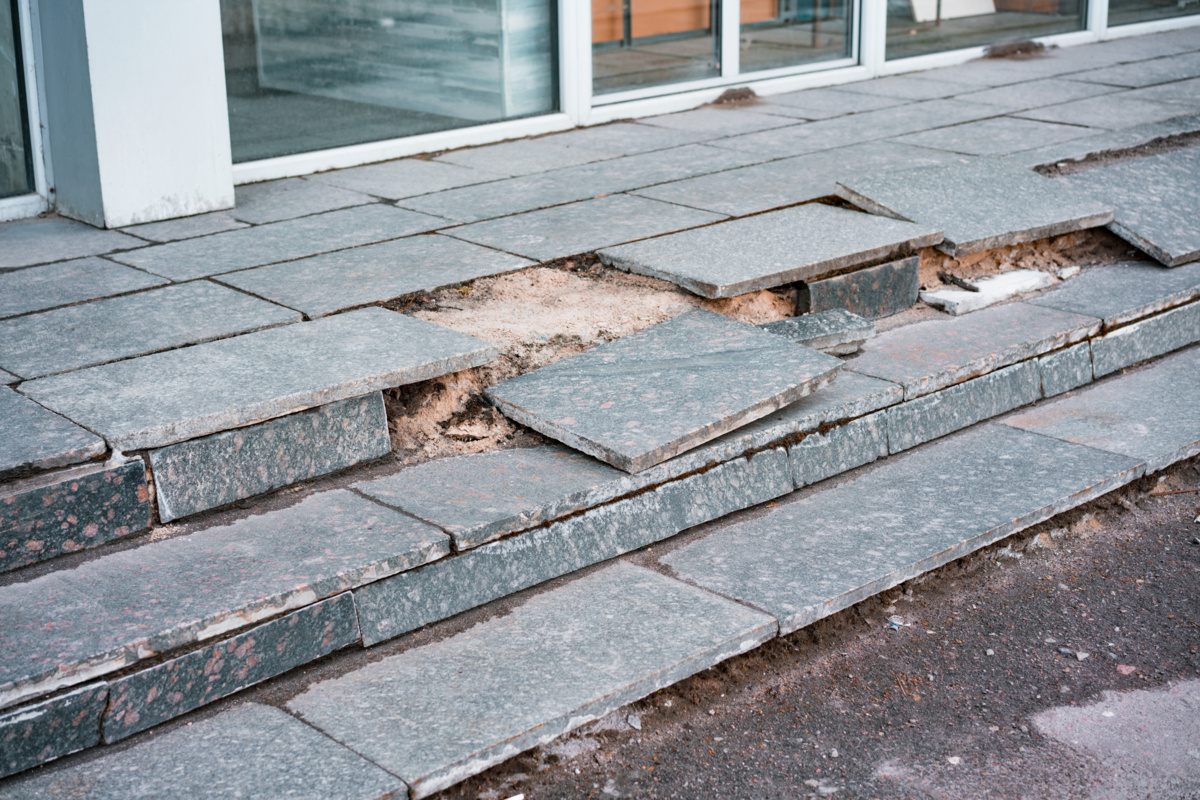
Sinking concrete steps often point to base movement, poor support, or water-related settlement. Gaps between the steps, stoop, walkway, or home can also let water collect where it should not.
A settled step may continue to move over time if the underlying cause persists. Settlement raises the same question homeowners face with a sunken slab: whether leveling or full replacement solves the problem depends on what caused the movement. Rebuilding the step area allows the contractor to review base prep, forms, slope, and drainage together.
Uneven Risers or Treads
Uneven steps can create a tripping hazard because the walking rhythm changes from one step to the next. In winter, snow and ice can make those height differences even harder to see.
A step that feels awkward to climb may also be difficult for guests, delivery workers, children, or older adults. If the risers are inconsistent because the steps have shifted, replacement may be safer than a surface repair.
Cracking Through the Step
Deep cracks are more concerning when they run through the tread, riser, or corner of the step. Cracks that follow movement usually suggest the concrete is responding to stress, settlement, or loss of support.
Surface repairs may improve the appearance for a while, but they may not hold if the step continues to move. When cracks are structural or repeated, replacement is often the cleaner decision.
Severe Scaling or Spalling
Concrete scaling and spalling are signs that the surface is breaking down. Scaling usually looks like flaking or peeling, while spalling can expose aggregate or create deeper rough areas.
A small amount of surface wear may be manageable, but severe breakdown can affect traction, appearance, and long-term durability. If the step surface is crumbling across large areas, replacement may offer a more reliable fix.
Repair can still be worth discussing when the steps are stable and the damage is limited. The deciding factor is whether the issue is only on the surface or tied to movement, drainage, or structural deterioration.
How Much Does Concrete Step Replacement Cost?
Concrete steps replacement cost depends on the size of the steps, number of risers, demolition needs, access, forming, base prep, drainage correction, finish, and whether the stoop or nearby walkway also needs work. A simple step replacement is different from rebuilding an entry area that has settlement or water problems.
Project pricing can also change when steps are part of a larger exterior concrete plan. Homeowners can review what affects the cost of exterior concrete work to understand why one project may be straightforward while another requires more prep or surrounding concrete adjustments.
Should You Replace Steps During a Driveway or Walkway Project?
Steps are worth reviewing during a driveway, walkway, or stoop project because these surfaces often connect. A new walkway beside old, uneven steps can leave the entry feeling unfinished, and mismatched elevations may create drainage or access issues. There is usually a cost and finish advantage to upgrading steps and walkways during the same driveway project rather than returning for them later.
Cornerstone handles steps, stoops, and connected concrete surfaces that complement driveway installation and replacement work. If you are already planning concrete around the front entry, evaluating the steps at the same time can help the finished project function more cleanly.
How Does Cornerstone Review Concrete Steps and Stoops?
Cornerstone Concrete looks at concrete steps as part of the full entry area, not just as a single damaged surface. We want to understand whether the issue is cosmetic, structural, drainage-related, or connected to nearby concrete movement.
During a step review, we may look at:
- Whether the steps are level, stable, or pulling away
- How cracks, scaling, or spalling are affecting the surface
- Whether water, snow, or ice collects near the entry
- How the steps connect to the stoop, walkway, apron, or driveway
- Whether repair, replacement, or combined concrete work is the better fit
Our recommendations are based on what will solve the problem, not just what makes the steps look better for the moment. When material quality is part of the conversation, we can also explain how our trusted concrete supply partners support consistent project planning.
Are Your Front Steps Starting to Feel Unsafe?
Front steps do more than connect the walkway to the door. They shape how safe, stable, and finished the entry feels every time someone walks up to your home. When cracking, sinking, uneven risers, or surface breakdown start affecting daily use, a closer look can help you avoid putting another short-term patch over a bigger concrete problem.
Since 1989, Cornerstone Concrete has completed more than 10,000 driveways, walkways, stoops, and step projects across the Twin Cities, earning a BBB A+ rating and Angi Super Service Award. Contact Cornerstone Concrete to have our team review the condition of your steps, explain what may be causing the damage, and recommend the next step for your Minneapolis or Twin Cities home.