A driveway replacement is already a major home exterior project, especially in Twin Cities freeze-thaw climates, so it is worth asking one important question before work begins: Should nearby steps and walkways be updated at the same time?
For many homeowners, the answer depends on condition, layout, drainage, budget, and how the surfaces connect. If your walkway is uneven, your front steps are cracked, or the driveway no longer lines up cleanly with the entry path, combining the work may create a more practical finished result. At Cornerstone Concrete, we often help homeowners think beyond the driveway slab so the surrounding concrete works together instead of feeling patched in later.
Why Look at Steps and Walkways During a Driveway Replacement?
Driveway replacement is a good time to review nearby concrete because the site is already being opened up, formed, graded, and prepared for new concrete. When steps, walkways, aprons, or extensions are planned together, the project can account for proper slope, access, and long-term durability from the start. FHWA guidance on proper slope, drainage, and concrete durability reinforces why planning the full surface area matters, especially in freeze-thaw climates.
A new driveway can look unfinished if it stops beside worn-out steps or a settled walkway. More importantly, mismatched elevations can create awkward transitions for walking, shoveling, snowblowing, and pulling vehicles in or out of the garage.
When Does Combining the Work Make Sense?
Not every driveway replacement needs extra concrete work. However, adding steps or walkways to the plan often makes sense when the surrounding surfaces already show functional problems.
The Walkway Has Settled or Shifted
A walkway that has dropped, tilted, or separated from the driveway can direct water where it should not go. It can also create a tripping point between the parking area and the front entry. When evaluating concrete driveway leveling vs. replacement for a failing walkway, leaving that shifting surface in place while replacing the main driveway may only solve part of the problem.
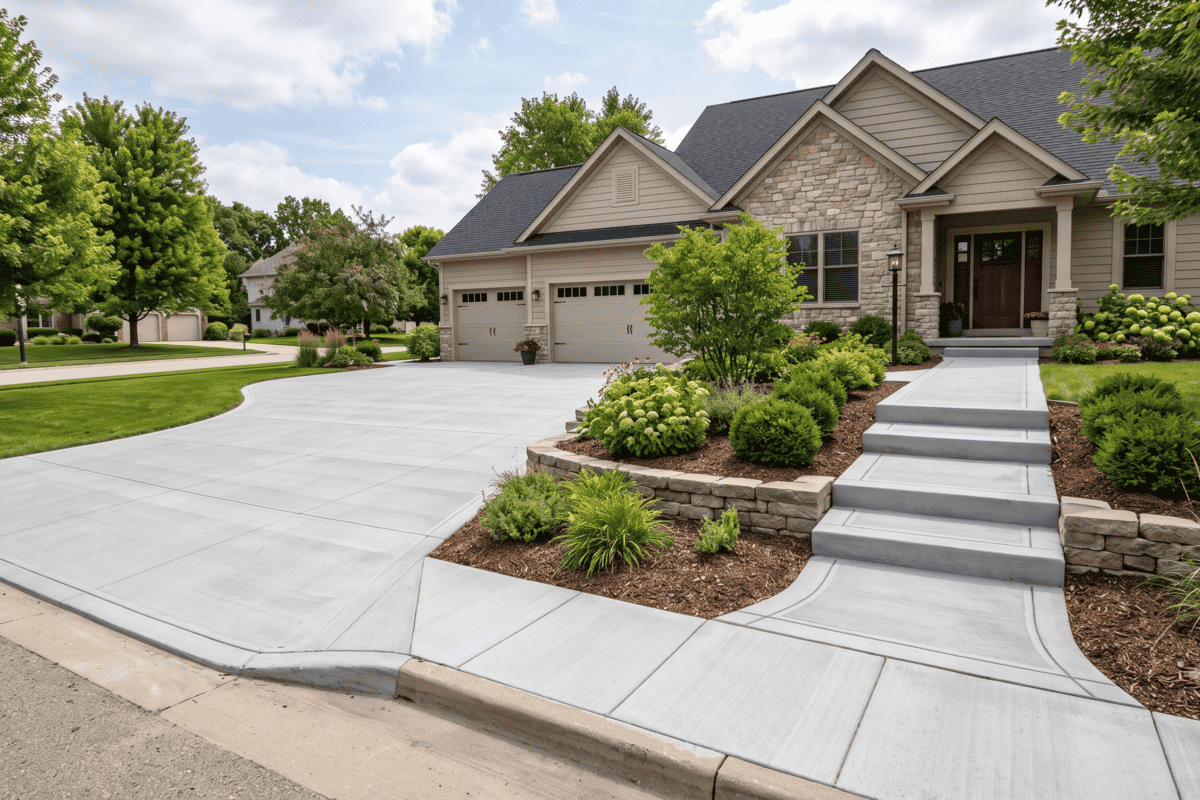
A new matching driveway and walkway can create a cleaner route from the garage, sidewalk, or street to the front door. It also gives the crew a chance to plan slope and finish consistency across connected surfaces.
The Steps Are Cracked, Uneven, or Poorly Placed
Concrete step repair may be enough for minor surface wear, small chips, or cosmetic damage. Larger issues are different. Deep cracks, uneven risers, settlement, poor drainage, or a step layout that no longer works with the driveway may be signs that replacement should be discussed.
A cracked concrete driveway with steps requires careful planning because the walking path, driveway edge, and entry elevation interact. If one surface changes height but the others stay the same, the transition can feel awkward or unsafe.
The Driveway Layout Is Changing
Homeowners sometimes use driveway replacement as a chance to widen parking, improve garage access, or adjust the flow around the home. In those situations, the walkway and steps should be reviewed before the forms are set.
A wider driveway, a new apron, or an added parking pad may change how people move from the vehicle to the house. Reviewing the full driveway and walkway design early helps avoid a finished driveway that looks good but does not improve daily use.
How Does This Affect Driveway Replacement Cost?
Driveway replacement cost depends on project size, tear-out needs, access, base prep, grading, concrete mix, reinforcement, finish, and any add-on surfaces. Including steps or walkways increases the project scope, but it can reduce duplicated planning and setup compared with scheduling separate projects later, so the better question isn’t the price of additional square footage, but whether the added concrete solves a real problem while the crew is already on-site
Factors That Can Influence the Estimate
Several details can affect the final cost of combining driveway and walkway work:
- Demolition needs: Existing concrete, asphalt, steps, or failed base material may need to be removed.
- Grade changes: Sloped yards, garage transitions, and front entry elevations can affect forming and prep.
- Drainage concerns: Water needs to move away from the home, garage, and walking routes.
- Finish consistency: Matching broom texture, edge details, and control joints takes planning.
- Add-on scope: Walkways, stoops, aprons, driveway extensions, and steps all affect the project size.
For homeowners comparing options, reviewing walkways, steps, aprons, and other add-on concrete work can help clarify what belongs in the same estimate.
What Design Details Should You Review Before the Pour?
Driveway and walkway design should support how the home is actually used. The better question is whether the added concrete solves a real problem while the crew is already working on the property. People walk from vehicles to the front door, bring out trash bins, shovel snow, access the garage, and move around landscaping or retaining edges.
Good planning also helps the finished concrete feel intentional. A new driveway next to an old, narrow, or uneven walkway can make the older concrete stand out. Matching driveway and walkway surfaces can give the home exterior a cleaner, more complete appearance.
Access and Walking Routes
The best layout is usually the one that feels natural. If people already cut across the lawn to reach the front door, the walkway may be in the wrong place. If the driveway edge is too tight near the garage or entry, an extension or adjusted path may improve daily access.
During concrete driveway installation, layout decisions should happen before forms are finalized. Moving a walkway, widening a landing, or adjusting a step location is easier to discuss before the pour than after the new concrete is in place.
Drainage and Snow Removal
Minnesota driveways deal with snow, ice, thawing, and refreezing. Poor transitions can leave low spots where water collects, then freezes. Uneven edges can also make snow removal more frustrating.
A combined plan can help align slopes between the driveway, walkway, and steps. It can also reduce sharp or awkward edges that catch shovels, plows, or snowblowers.
Should You Repair or Replace Concrete Steps?
Repair can be a smart choice when the damage is limited and the structure is still stable. Small chips, surface scaling, or isolated wear may not require full replacement.
Replacement becomes more practical when the steps are moving, cracking, holding water, or no longer align with the new driveway layout. If the driveway is being torn out and rebuilt, it may be the right time to correct step height, landing size, or the connection between the walking path and entry.
A Minneapolis concrete driveway contractor can evaluate whether the steps are a separate cosmetic issue or part of a bigger access and drainage problem, including how each surface connects, before recommending whether repair or replacement makes more sense.
What Makes Cornerstone Concrete a Practical Fit for a Combined Driveway Project?
We specialize in residential exterior concrete, so we know how driveways, walkways, steps, aprons, and entryways work together. We are not just looking at one slab in isolation. Homeowners choose us for combined projects because we bring:
- A focused process for driveway tear-out, setup, pour, cut, and cleanup
- Practical guidance on whether add-on concrete is worth including
- Experience with Minnesota freeze-thaw conditions and residential access needs
- Options for standard concrete and a maintenance-free concrete mix option
- A clear look at how driveway edges, steps, walkways, and garage transitions connect
Our goal is to help you make a smart project decision, not add work that does not solve a problem. If the existing walkway or steps still function well, we will tell you. If they are likely to hold back the finished result, we will explain why.
Could One Concrete Project Solve More Than the Driveway?
A driveway replacement can be the right time to fix more than cracked or aging pavement. Consider improving the path to your front entrance, correcting uneven steps, cleaning driveway margins, or upgrading your home’s façade.
Since 1989, Cornerstone Concrete has installed more than 10,000 driveways across the Twin Cities. If you are planning a concrete driveway replacement, contact Cornerstone Concrete so we can review your driveway, steps, walkways, apron, and nearby concrete surfaces together. You can also review our full driveway tear-out and replacement process or learn more about the long-term advantages of concrete driveways before requesting an estimate.