
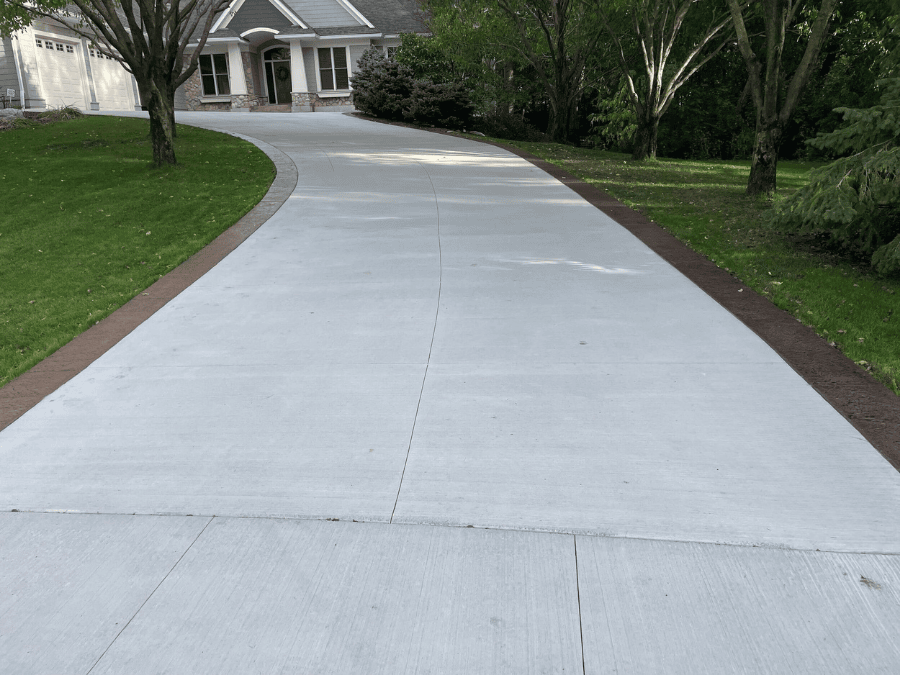
A professionally installed concrete driveway lasts 30–50 years. With proper base preparation, high-quality concrete mixes, and regular maintenance—such as joint sealing and surface treatments—you can maximize durability, even in Minnesota’s freeze-thaw climate.
Average Concrete Driveway Lifespan (30–50 Years)
- Typical Range: Most residential concrete driveways endure 30–40 years under regular use.
- Extended Range: With enhanced reinforcement and ideal conditions, they can reach 50 years or more.
- Primary Influencers: Slab thickness, reinforcement type, base quality, and maintenance routine directly affect longevity.
When you choose Cornerstone Concrete, our installation methods are designed to extend the lifespan of your driveway to the upper end of this range.
Key Factors That Influence Durability
- Base Preparation
- Proper grading and compaction of the subsoil prevent settling and cracking.
- A stable foundation ensures uniform support for the concrete slab.
- Concrete Mix & Reinforcement
- An air-entrained mix helps concrete resist damage from freeze-thaw cycles.
- Fiber-reinforced concrete, using macro synthetic fibers, adds strength throughout the slab and reduces cracking.
- Slab Thickness
- Standard passenger vehicles perform well on a 4-inch slab.
- Heavier loads—RVs or delivery trucks—benefit from thicker slabs and added reinforcement.
- Climate and Weather
- Minnesota’s frequent freeze-thaw cycles stress concrete if not properly detailed.
- The strategic placement of control joints and innovative curing practices help guard against moisture intrusion.
- Usage and Load
- Every day, car traffic poses minimal stress, but heavy equipment may require adjustments to the slab’s design.
The Cornerstone Difference – Our Four-Crew Installation Process
At Cornerstone Concrete, we’ve refined our installation and replacement workflow into four specialized crews. This systematic approach ensures expert attention at every stage:
- Tear Out Crew
- We remove the existing driveway with a bobcat and dump truck.
- Old material is hauled to a local recycling station for eco-friendly disposal.
- Set Up Crew
- Forms are set according to project specifications.
- Subsoil is graded and compacted to create a stable base for the concrete.
- Pour Crew
- We meet the ready-mix truck and place concrete with precision.
- Macro synthetic fibers or steel reinforcement are integrated per design.
- Cut and Clean Crew
- Expansion joints are laid out and cut at the correct spacing.
- Final cleanup leaves your new driveway ready for use—no sealing required, thanks to our innovative practices.
Our process ensures durable, low-maintenance driveways that withstand harsh Minnesota weather without requiring ongoing sealing or repairs.
Maintenance Practices to Extend Lifespan
Even with a premium installation, proactive care ensures your driveway continues to perform for decades. We recommend:
- Annual Cleaning: Sweep away debris and wash with mild detergent to clean stains and grit.
- Joint Sealing (Every 2–3 Years): Refresh control and expansion joints to prevent water penetration.
- Surface Sealer (Every 3–5 Years): Apply a breathable sealer to protect against moisture and chemical damage.
- Prompt Crack Filling: Address hairline cracks (<¼ inch) immediately to halt freeze-thaw expansion.
- Drainage Verification: Ensure gutters and grading direct water away from the edges of the slab.
Our maintenance packages let you skip the DIY guesswork—Cornerstone Concrete handles everything to keep your driveway in top condition.
Signs You Need Repair or Replacement
Watch for these warning signs:
- Widening Cracks (>½ inch) – Indicates stress or base issues.
- Slab Settling or Heaving – Creates uneven surfaces and potential trip hazards.
- Spalling or Surface Pitting – Flaking of concrete exposed aggregate which weakens the slab.
- Joint Seal Failure – Gaps in the seals allow moisture to seep under the slab.
- Staining or Discoloration – Chemical spills or deicer damage can cause surface degradation.
Comparing Driveway Materials
Concrete offers standout benefits compared to other surfaces:
- Asphalt:
- Lifespan: 15–20 years.
- Maintenance: Frequent sealcoating, prone to rutting.
- Pavers:
- Lifespan: 20–30 years.
- Repair: Individual units can be easily replaced; however, there is a higher initial cost.
- Gravel:
- Lifespan: Varies; needs regular regrading and refilling.
With Cornerstone Concrete, concrete driveways often deliver the best balance of longevity, ease of maintenance, and load capacity.
Environmental Advantages & Sustainable Materials
Our partnership with Holcim ensures your driveway uses sustainable concrete mixes validated by science-based targets. Benefits include:
- Reduced Carbon Footprint: Incorporating supplementary materials like slag or fly ash.
- Durability Equals Waste Reduction: Longer lifespan means fewer replacements and less demolition.
- Permeable Options: We offer permeable concrete to naturally manage stormwater.
These eco-friendly choices make your driveway resilient and responsible.
Decorative & Specialty Concrete Options
Elevate your driveway’s appearance with professional finishes:
- Stamped Concrete: Imitates natural stone or brick patterns.
- Integral Color: Uniform coloring throughout the slab for lasting vibrancy.
- Exposed Aggregate: Showcases polished stones for a textured surface.
- Broom Finish with Borders: Balances slip resistance with decorative edge bands.
Our design team helps you choose a look that complements your home and landscape.
Resurfacing and Overlays for Aging Driveways
When a driveway’s base remains sound but the surface shows wear, consider overlays:
- Thin Polymer Overlays: Renew the surface with color and texture.
- Microtoppings: Very thin cement-based coatings for a fresh finish.
- Stampable Overlays: Add decorative patterns over existing concrete.
Resurfacing delays full replacement at a fraction of the cost. Cornerstone Concrete evaluates your driveway and recommends the ideal overlay strategy.
Professional Tips to Maximize Driveway Life
- Annual Professional Inspections – Early detection of joint or surface issues.
- Maintain Effective Drainage – Keep water flowing off the edges of the driveway.
- Use Concrete-Safe Deicers – Protect the surface from harsh chemicals.
- Keep Vegetation in Check – Prevent roots and weeds from growing into joints.
- Enroll in Maintenance Plans – Let Cornerstone Concrete handle sealers, crack repairs, and cleaning.
Each tip, combined with our proven installation process, helps your driveway last for decades.
Thinking About a New Driveway? We’ve Got You Covered
Whether you’re planning a brand-new driveway or replacing an older one, Cornerstone Concrete is here to assist. Concrete is known for its durability, curb appeal, and long-term value, and we’re ready to show you why it’s a top choice for homeowners.
Contact the team at Cornerstone Concrete today for a free estimate or to explore your options. We’ll guide you through every step and help you make a confident, lasting investment.
FAQs
What is the typical lifespan of a concrete driveway?
Professionally installed concrete driveways last 30–50 years, depending on slab design and care.
How often should driveways be sealed?
Seal the surface every 3–5 years and refresh the joint sealant every 2–3 years to prevent moisture from entering.
Can small cracks lead to significant damage?
Yes. Treat hairline cracks promptly—freeze-thaw cycles can enlarge them and compromise the slab’s integrity.
Do I need a thicker slab for heavier vehicles?
For RVs and trucks, 6–8 inches of concrete with fiber or rebar reinforcement is recommended.
How does fiber-reinforced concrete improve durability?
Macro synthetic fibers mix into the slab to reduce cracking and increase overall strength.