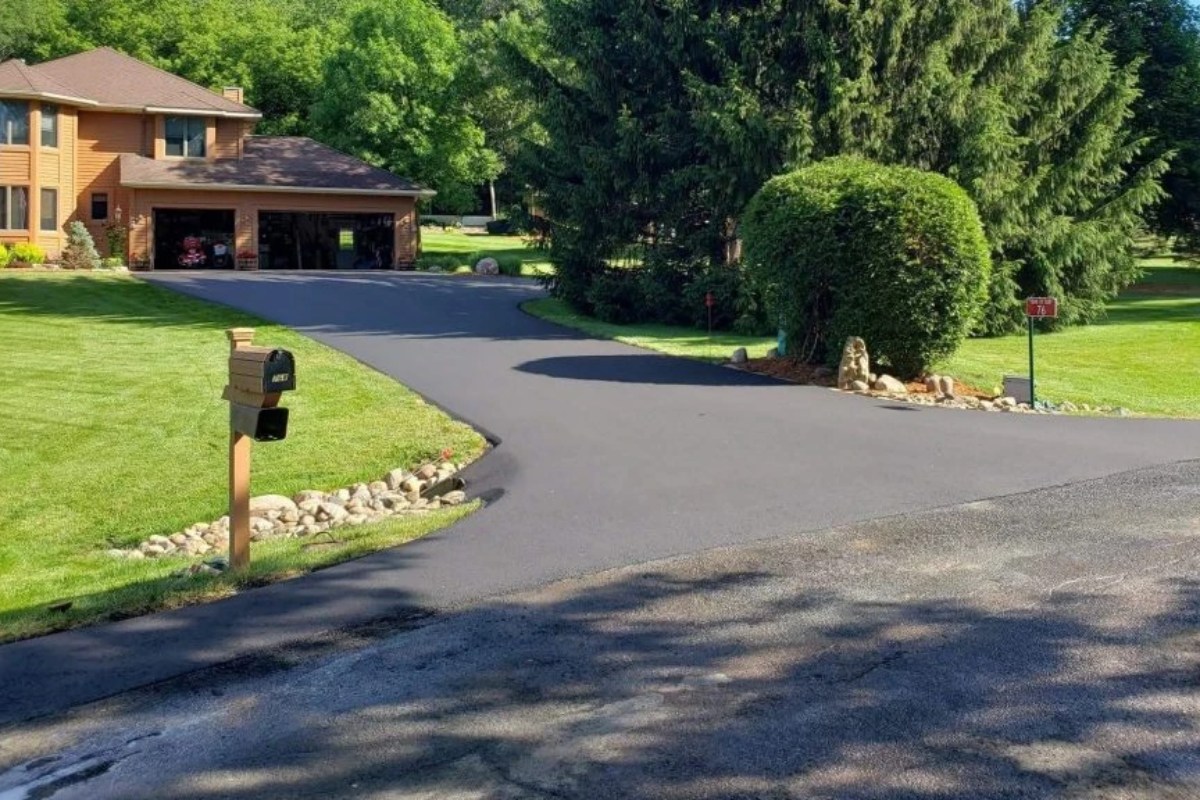
When it’s time to install or replace a driveway, most homeowners face the same question: Should I go with concrete or asphalt? Both materials are popular, functional, and widely available. However, they perform very differently in terms of lifespan, maintenance, appearance, and value.
At Cornerstone Concrete, we’ve specialized in residential concrete driveways since 1989. With over three decades of experience, we’ve seen the real-world performance of both materials. We believe strongly that concrete is the better long-term choice for most homeowners, and this guide will show you why.
Comparing Concrete and Asphalt Driveways
A concrete driveway is often considered better than an asphalt driveway due to its increased longevity, minimal maintenance needs, and superior durability, particularly in harsh weather conditions like those found in Minnesota and Wisconsin. Additionally, concrete can enhance your home’s curb appeal and resale value, making it a wise investment for homeowners. Here are some pros and cons of concrete and asphalt driveways:
Longevity and Durability
One of the most important factors to consider in any driveway project is how long the material will last. When properly installed and maintained, a concrete driveway can last between 30 and 40 years. In many cases, we’ve seen them last even longer.
Asphalt driveways, on the other hand, tend to last only 15 to 25 years. That’s because asphalt is more flexible and softens under heat, which can lead to deformation and cracks. While it’s often praised for its flexibility in colder weather, it simply doesn’t have the structural strength or long-term reliability of concrete.
For homeowners who plan to stay in their homes for many years—or for those looking to increase resale value—a concrete driveway is a much better long-term investment.
Cost and Value Over Time
There’s no question that asphalt is cheaper to install. The average asphalt driveway costs between three to five dollars per square foot. Concrete ranges more.
But here’s what many homeowners overlook: asphalt’s lower initial cost often comes with more frequent repairs, sealing, and eventual replacement. These ongoing costs can add up quickly over the years.
Concrete, while more expensive upfront, requires much less maintenance. And thanks to its durability, you won’t be paying for resurfacing or full replacement nearly as often. When you compare the total cost of ownership over 30 years, concrete nearly always comes out ahead.
Maintenance and Upkeep
All driveways need some level of care, but the difference between concrete and asphalt is significant.
Concrete is extremely low-maintenance. If sealed every few years, it holds up well against stains, weather, and wear. Occasional power washing and resealing are typically all that’s needed to keep it looking great.
Asphalt, by contrast, requires more regular attention. To prevent cracking and potholes, it should be sealed every three to five years. It also deteriorates more quickly with sun exposure and vehicle use, especially in areas with frequent freeze-thaw cycles.
While asphalt is easier to patch, those patches are visible and often reduce the visual appeal of the surface. Concrete repairs are less frequent, and when done properly, they preserve the clean, uniform appearance homeowners love.
Appearance and Curb Appeal
Concrete offers significantly more design potential than asphalt. It can be stamped, colored, textured, or even stained to match your home’s architecture or your style. Whether you’re aiming for a modern, classic, or rustic look, concrete gives you the flexibility to customize your driveway as a true extension of your home.
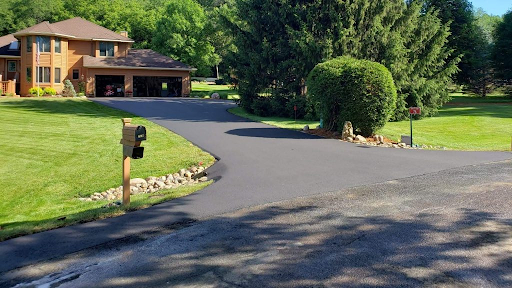
Asphalt, while neat and uniform, is limited to a flat black finish. It’s functional, but it doesn’t offer the same opportunity to enhance curb appeal or create a standout first impression.
For homeowners who care about how their property looks and feels, concrete offers far greater aesthetic value.
Climate Considerations
In regions like Minnesota and Wisconsin, cold weather and freeze-thaw cycles are a major factor in driveway wear. While some argue that asphalt is better suited to cold climates because of its flexibility, the reality is more nuanced.
Concrete holds up just as well—if not better—when it’s installed correctly. Proper grading, sealing, and drainage are essential to prevent cracking and ensure long-lasting performance. At Cornerstone Concrete, we specialize in building driveways designed specifically for the upper Midwest’s climate challenges. When installed with our expertise, concrete driveways stay strong and attractive for decades.
Additionally, concrete reflects sunlight and stays cooler in the summer months. Asphalt, by contrast, absorbs heat and can become soft and sticky in high temperatures. This can lead to quicker deterioration and surface problems.
Environmental Impact
While no building material is perfect, concrete has certain environmental advantages. Its lighter color reflects sunlight, reducing surface heat buildup and helping to combat the urban heat island effect. Concrete also requires less frequent replacement, which means fewer materials and resources are used over time.
Asphalt does have the benefit of being recyclable, and some driveways are made with recycled materials. However, the need for frequent sealing and replacement can reduce its overall environmental efficiency.
Installation Timeline
If speed is your top priority, asphalt can be installed and ready for use within 24 to 48 hours. Concrete takes longer to cure fully, usually around seven days before it can handle vehicle traffic. But while asphalt wins in terms of speed, concrete wins in long-term performance and durability.
For most homeowners, the short wait is well worth the lasting benefits.
Why We Recommend Concrete
When you look at the full picture—durability, cost over time, maintenance, appearance, and performance—concrete clearly stands out as the better investment. It gives homeowners peace of mind, adds visual appeal to the home, and requires far less upkeep over the years.
At Cornerstone Concrete, concrete driveways are all we do. We’ve specialized in residential concrete driveway installation and replacement since 1989, serving homeowners throughout Minnesota and Wisconsin. Our focus, experience, and attention to detail ensure that each project is completed with the highest level of care.
Service Areas
While we’d love to pour concrete driveways across the entire country, our crews currently serve local areas in and around St. Paul, Minnesota, and much of Wisconsin. If you’re unsure whether we cover your neighborhood, we invite you to check our service area page or give us a call.
Ready to Upgrade Your Driveway?
If you’re considering a new driveway or looking to replace an old one, we’re here to help. Concrete offers unmatched value, beauty, and reliability, and we’d be proud to show you why so many homeowners choose it time and time again.
Reach out to the team at Cornerstone Concrete for a free estimate or to learn more about your options. We’re here to walk you through every step of the process and help you make a decision you’ll feel great about for years to come.
What specific factors contribute to the longevity of concrete driveways compared to asphalt?
The longevity of concrete driveways compared to asphalt is primarily due to their superior durability and resistance to weather conditions. Concrete can last 30 years or more with proper maintenance, while asphalt typically lasts about 15-20 years. Additionally, concrete is less susceptible to softening in extreme heat, cracking from freeze-thaw cycles, and damage from UV exposure.
What maintenance practices are required for both concrete and asphalt driveways throughout their lifespan?
Both concrete and asphalt driveways require maintenance to ensure longevity, but the practices differ. Asphalt needs sealcoating every 3-5 years to protect against UV damage and weathering, while concrete should be resealed every 5-10 years to prevent cracking and staining.
What are the environmental impacts of choosing concrete over asphalt for driveways?
Choosing concrete over asphalt for driveways can have significant environmental impacts. Concrete is more durable and has a longer lifespan (often exceeding 30 years) compared to asphalt, which typically lasts around 15-20 years, thus reducing the frequency of replacement and associated resource consumption. Additionally, concrete reflects more sunlight, contributing to cooler surface temperatures and reducing urban heat island effects.